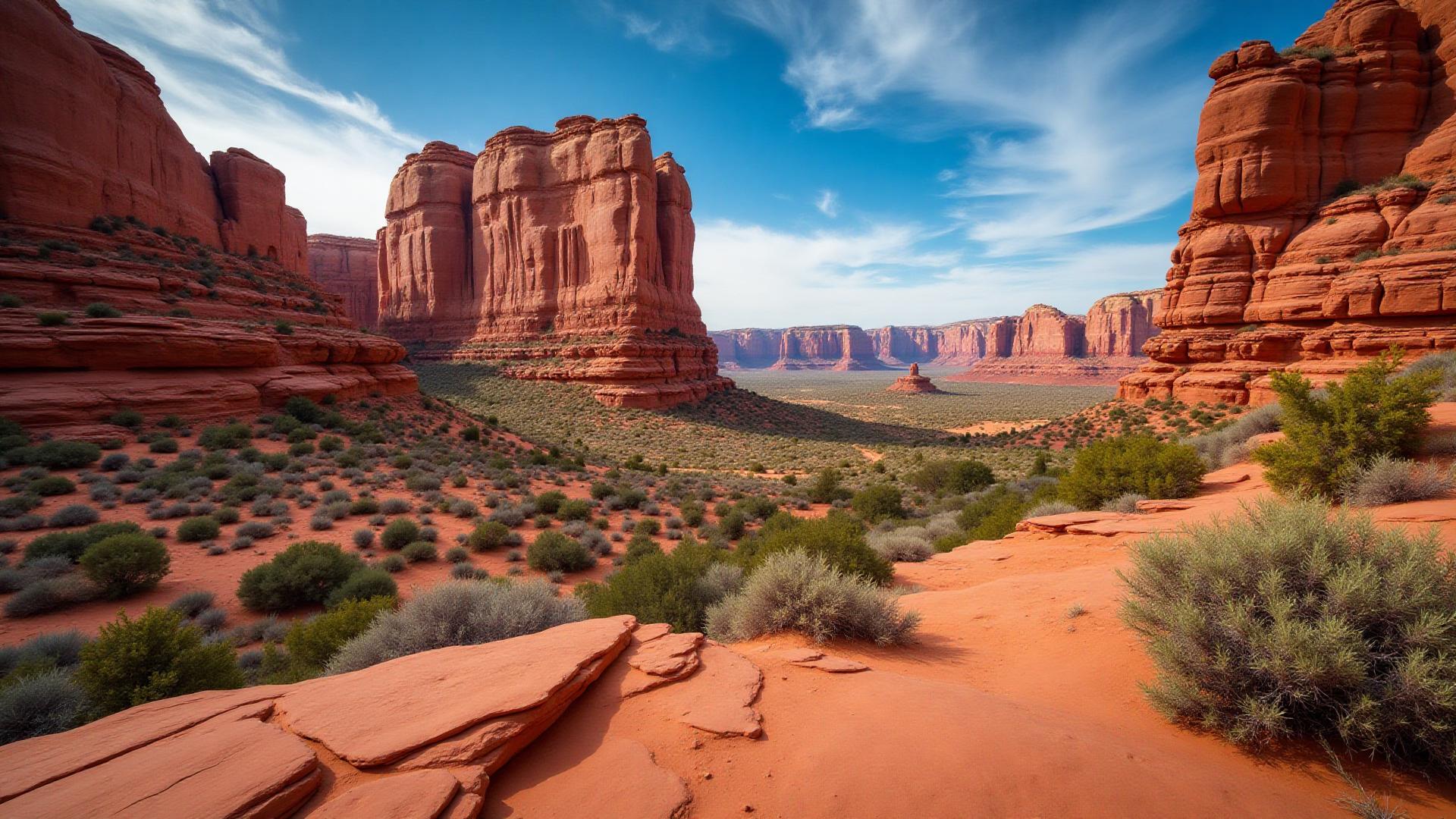
Sell Your Utah Land By Owner
From Park City ski lots to Moab recreation acreage and Silicon Slopes development parcels—navigate scarce private land inventory, critical water rights, and 4.55% state tax while keeping your full 6% agent commission in America's most park-rich state
Five Utah Territories
From Wasatch Front tech boom to Southern Utah's Mighty Five national parks—understanding regional market dynamics maximizes your land value
Wasatch Front: Salt Lake to Provo Tech Corridor
$15,000-$100,000+/acre (Silicon Slopes) | $8,000-$25,000 (suburban) | $30,000-$150,000 (ski resort)
Population concentration: 80% of Utah lives along the 100-mile Wasatch Front corridor, creating relentless development pressure on private land.
Silicon Slopes explosion: Provo-Orem-Lehi tech hub ranks #5 fastest-growing US tech market (2020-2025). Qualtrics ($8B acquisition), Domo, Lucid, Pluralsight headquartered here. Remote worker influx from California drives residential expansion.
Ski resort premium: Park City (largest ski resort in US), Deer Valley, Snowbird, Alta proximity. Ski-in/ski-out lots command $30K-$150K+/acre (extremely rare). Land within 10 miles adds $10K-$30K/acre premium.
Water rights mandatory: Culinary water connections cost $15K-$50K per home. Secondary irrigation water rights $5K-$20K per acre-foot. Many parcels landlocked without water = unsellable to developers.
Federal land constraint: Wasatch-Cache National Forest borders limit expansion, drives premium for private inholdings. Mountain bench premium (Draper, Sandy, Bountiful) command 50-100% premium over valley floor for views and air quality.
Key Factor: "Water rights and legal access dominate deals—70% of negotiations center on water certificates and road easements, not price"
Park City: Ultra-Premium Ski & Second Home Market
$50,000-$250,000+/acre (ski-in/ski-out) | $25,000-$75,000 (viewshed) | $15,000-$40,000 (remote)
Ski resort dominance: Park City Mountain (7,300 acres, largest US resort), Deer Valley (ultra-luxury, Olympics 2002/2034 host), Sundance (Robert Redford's resort).
2034 Winter Olympics: Salt Lake City awarded 2034 games, Park City hosting venues. Infrastructure upgrades underway. Pre-event appreciation window typically sees 50-100% land value increase (Vancouver 2010 +85%, Sochi 2014 +110%).
Second home capital: 60%+ of Park City properties are second homes (highest in Utah). Buyers from Texas, California, East Coast seeking mountain escape.
Acreage scarcity: Summit County = 95%+ federal/state land (Wasatch-Cache National Forest). Private land EXTREMELY limited. Historical mining heritage—some parcels have mineral rights complications requiring title research.
Water challenges: Mountain snowpack dependent. High-altitude wells expensive ($50K-$100K). Some areas culinary water hookup impossible.
Key Factor: "Ski-in/ski-out designation adds $100K-$500K to raw acre value—proximity to lift infrastructure is everything in Park City market"
Southern Utah: National Parks Recreation Premium
$10,000-$50,000/acre (park proximity 5-30 mi) | $4,000-$12,000 (rural) | $2,500-$6,000 (remote grazing)
"Mighty Five" National Parks: Zion (4.5M visitors/year, #3 most-visited park), Bryce Canyon (2.7M), Arches (1.7M), Canyonlands (1M), Capitol Reef (1.2M) generate $1.5B annual tourism economy.
Moab recreation hub: Mountain biking (Slickrock Trail), off-roading (Hell's Revenge), climbing, Colorado River rafting. Land within 20 miles of Moab = $15K-$40K/acre.
St. George retirement boom: Fastest-growing small metro in US (2020-2024). California/Pacific Northwest retirees fleeing high taxes. Zion proximity (45 minutes) adds $10K-$25K/acre premium.
Water scarcity extreme: 8-12" annual rainfall. Colorado River allocation disputes. Most land worthless without water rights. Deep wells (400-1,000 feet) cost $50K-$150K in sandstone geology.
BLM surrounded parcels: Many private "inholdings" accessed only through BLM land. Right-of-way permits required (Bureau of Land Management regulations). Reduces value 30-50% without guaranteed access.
Key Factor: "National park proximity is quantifiable—every mile closer to Zion/Moab adds $500-$1,500/acre, with 5-mile radius commanding 200-300% premium over 30-mile radius land"
Eastern Utah: Energy Leases & Open Range
$2,000-$6,000/acre (ag/grazing) | $4,000-$10,000 (oil/gas active) | $3,000-$8,000 (Uinta Basin)
Uinta Basin oil/gas: Active drilling, horizontal wells. Royalties 12.5-18.75% typical. Bonus payments $500-$2,000/acre for leases.
Open range tradition: Cattle grazing on BLM allotments. Private land = winter grazing + hay production. 40-80 acres per animal unit (arid climate).
Mineral rights issues: Federal government retained minerals on much land (1916-1946 Stock-Raising Homestead Act). Surface owner often doesn't own minerals. Disclose clearly to buyers.
Key Factor: "Mineral rights ownership disclosure is mandatory—split estates common, with federal mineral ownership complicating surface sales and financing"
Cache Valley: Productive Ag Land & Logan Metro Growth
$8,000-$18,000/acre (irrigated farmland) | $5,000-$12,000 (grazing) | $15,000-$35,000 (Logan suburban)
Logan metro growth: Utah State University enrollment growth, tech sector expansion (Space Dynamics Lab). Suburban sprawl into ag land.
Quality ag land: Bear River irrigation. Cache Valley productive soils. Wheat, alfalfa, corn, barley = highest crop yields in Utah.
Greenbelt pressure: Developers targeting greenbelt ag land adjacent to Logan, Smithfield, Hyrum for future residential (buy, hold 5-10 years, develop).
Bear Lake recreation: "Caribbean of the Rockies" (turquoise water). Vacation homes, raspberry farms, tourism economy.
Key Factor: "Greenbelt status with development potential = highest value—land taxed at $1,500/acre (ag) worth $15,000/acre (development) once zoned"
7 Utah Truth Points
Critical factors every Utah land seller must understand to avoid costly mistakes
Water Rights: More Valuable Than Land Itself
Utah uses 'prior appropriation' system ('first in time, first in right'). Water rights are SEPARATE from land deed—you can own 100 acres but zero water rights (worthless for ag/development). Rights measured in acre-feet or shares in canal companies. Buyers demand: proof of appropriation (Division of Water Rights certificate), beneficial use history, CFS flow rates. Southern Utah: $10K-$30K per acre-foot. Many parcels landlocked without water = unsellable. Disclose water status BEFORE listing to avoid deal collapse.
Federal Land Dominance: 64.4% Public Ownership
Utah = 2nd highest federal land % in America (only Nevada higher at 80%). BLM, Forest Service, National Parks cover 64.4% of state. ONLY 35.6% private land available = scarcity premium. Many private parcels surrounded by public land ('inholdings'), accessible only through BLM/FS roads = right-of-way permits required. Landlocked parcels lose 30-60% value without guaranteed legal access. Check: BLM surface management maps, road easement agreements. Disclose access method clearly.
Greenbelt (FAA): 50-80% Property Tax Savings
Farmland Assessment Act: Agricultural land taxed on 'productive capability' NOT market value. Requirements: 5+ acres, $1,000+ annual gross ag income past 2 years, active agricultural use. Example: $20K/acre market value land taxed as if $3K/acre = 85% savings. Rollback penalty if use changes: 5 years back taxes owed (difference between market and FAA value) + 7% interest. Developers account for rollback cost. Provide: greenbelt application on file, ag income records, county assessor valuation.
4.55% State Income Tax on Capital Gains
Utah has flat 4.55% state income tax on ALL income (wages, capital gains, dividends—no distinction). Sell $400K land for $300K gain = $13,650 UT state tax + federal capital gains. Still lower than California (13.3%), New York (10.9%), Oregon (9.9%), but higher than Nevada (0%), Texas (0%), Wyoming (0%). Plan: 1031 exchange to defer, installment sale to spread over years, donate conservation easement for deduction.
Disclosure: Utah Real Property Transfer Act
Utah Code 57-1-37: Seller must provide Real Property Transfer Disclosure to buyer. Applies mainly to residential, but raw land sellers should provide voluntary disclosure to avoid fraud liability. Disclose known defects: water rights status, access issues, BLM/FS dependencies, septic failure, contamination, boundary disputes, landlocked status, failed wells. Courts hold sellers liable for non-disclosure of 'material facts' even if not required by statute.
Property Tax: Pay Current Year at Closing
Utah property taxes assessed Jan 1, due Nov 30 same year (NOT arrears like Texas). Closing prorations: Seller pays Jan 1 to closing date, buyer pays closing to Dec 31. Example: Close Sept 1 = seller pays 8/12 of annual tax. Greenbelt affects amount dramatically ($500/year greenbelt vs $4,000/year market rate on $20K/acre land). Delinquent taxes = lien, title company requires payoff before closing.
Ski Resort & National Park Proximity Premiums
Quantifiable premiums: Park City ski-in/ski-out lots = $100K-$500K premium over non-ski lots. Zion National Park: $500-$1,500/acre premium per mile closer (5-mile radius = 200-300% premium vs 30-mile). Moab recreation: $1,000-$2,000/acre premium within 20 miles. Park City Olympics 2034: Pre-event appreciation 5-15% annually projected 2025-2034. Market these proximity factors with specific mileage/drive times, photos showing viewshed to resorts/parks.
The Complete Guide to Selling Land FSBO in Utah
Selling land by owner in Utah means navigating America's most complex land ownership landscape. With 64.4% federal ownership (second only to Nevada), scarce private land commands premium prices—from $3,000-per-acre rural grazing to $150,000-per-acre Park City ski-in/ski-out lots. But Utah's unique challenges go beyond scarcity: water rights are separate from land deeds and often worth more than the acreage itself, federal inholdings require navigating BLM right-of-way permits, greenbelt agricultural exemptions slash property taxes by 80% but trigger rollback penalties, and five world-famous national parks create quantifiable recreation premiums. Add a flat 4.55% state income tax on capital gains, Silicon Slopes tech boom driving Wasatch Front values, and prior appropriation water law dating to 1850s mining camps, and Utah FSBO sellers need specialized knowledge. This comprehensive guide reveals how to market scarce private land, document critical water rights, leverage park proximity, and keep your full 6% commission in the Beehive State.
IUnderstanding Utah's Federal Land Constraint: Why Scarcity Drives Value
The 64.4% Reality
Utah contains 54.34 million acres total. Of that, 34.99 million acres (64.4%) are federally owned—the second-highest percentage in America after Nevada (80%). This breaks down to: Bureau of Land Management (BLM) 22.8 million acres (42%), US Forest Service 8.2 million acres (15%), National Park Service 2.1 million acres (4%), Department of Defense/Bureau of Reclamation/other federal 1.9 million acres (3.5%). State lands (School and Institutional Trust Lands Administration - SITLA) add another 3.4 million acres (6.3%), and tribal lands (Uintah and Ouray Reservation, Navajo Nation) comprise 2.2 million acres (4%). This means ONLY 13.7 million acres (25.3%) are private property available for ownership, development, and commerce. When you subtract incorporated cities, roads, and non-transferable parcels, the truly available private land inventory shrinks to roughly 20% of Utah's total area.
Why This Matters for Sellers
Scarcity creates value. In states like Iowa (97% private land) or Ohio (95% private), land supply is abundant relative to demand. In Utah, limited supply facing growing demand (population growth 18% 2010-2020, fastest in America) drives persistent upward price pressure. Wasatch Front corridor buildable land is nearly exhausted—Salt Lake County has minimal remaining developable private acreage, pushing growth into Utah County (Provo-Orem), Davis County (Layton-Farmington), and Summit County (Heber Valley). This explains why Utah land rarely depreciates long-term and why strategic positioning (water rights, road access, park proximity) can double or triple per-acre value within 5-10 miles.
Inholding Challenges
Many Utah private parcels are "inholdings"—private land completely surrounded by federal land. BLM and Forest Service manage access through these public lands via right-of-way permits (BLM Form 2800-13, FS Special Use Permit). Without documented, guaranteed legal access, inholdings lose 30-60% of market value because buyers cannot finance (lenders require deeded access) or develop (counties won't issue building permits without legal access). If your land is an inholding, proactively secure a recorded BLM/FS right-of-way agreement BEFORE listing—this single document can add $50,000-$200,000 to a 40-acre parcel's value by making it financeable and developable.
IIWater Rights: Utah's Most Misunderstood Asset
Prior Appropriation Doctrine: "First in Time, First in Right"
Utah follows the "prior appropriation" water law system, inherited from 1850s-1870s mining camps where first claim to water sources established priority. Unlike "riparian rights" states (eastern US) where land ownership includes adjacent water, Utah SEPARATES water rights from land ownership entirely. You can own 500 acres but possess zero water rights—making your land worthless for agriculture, development, or even domestic use beyond minimal household needs.
How Water Rights Work
Water rights in Utah are quantified as: (1) Acre-feet per year (1 acre-foot = 325,851 gallons, enough to cover 1 acre in 1 foot of water), (2) Cubic feet per second (CFS) flow rate for irrigation ditches, or (3) Shares in mutual irrigation companies (e.g., "20 shares in Provo Reservoir Water Users Company"). Each right includes: priority date (earlier = senior, more reliable), point of diversion (creek, well, canal), place of use (specific parcels), purpose (irrigation, municipal, stockwatering), and quantity. Senior rights (1800s-early 1900s) almost always receive full allocation. Junior rights (1960s-present) often get curtailed (shut off) during drought.
Three Types of Water Rights
1. Surface water rights: Diverted from streams, rivers, lakes. Managed by Utah Division of Water Rights (file Application to Appropriate Water). Example: "0.5 CFS from Hobble Creek, priority date 1892, for irrigation of 40 acres." These rights stay with land when sold (appurtenant) UNLESS specifically severed in deed.
2. Groundwater rights: Pumped from wells. In most of Utah, landowners have right to drill wells for domestic use (one home, garden, minimal livestock) without permit. Large-scale use (irrigation, commercial) requires Application to Appropriate. Some areas have designated groundwater management zones where new appropriations are restricted (e.g., Cedar Valley, Beryl-Enterprise).
3. Irrigation company shares: Many agricultural areas (Cache Valley, Utah Valley, Sanpete Valley) use mutual irrigation companies formed 1800s-1900s. Water rights held as shares in company (e.g., "Strawberry Water Users Association 15 shares"). Shares can be bought/sold separate from land, prices $5,000-$30,000 per share depending on reliability and location.
Water Rights in Land Sales
When selling Utah land, buyers will ask: "What water rights convey?" You must provide: (1) Certificate of Water Right (Division of Water Rights document showing appropriation details), (2) Deed language showing water rights convey with land vs severed, (3) Well log (if applicable) from state engineer, (4) Irrigation share certificates if shares convey, (5) Recent water use evidence (past 5 years—non-use for 7+ years can trigger forfeiture proceedings). In southern Utah (Washington, Kane, Garfield counties), land without water rights often sells for $2,000-$4,000/acre while identical acreage WITH 3-5 acre-feet of water rights sells for $12,000-$20,000/acre. The water is worth $8,000-$16,000 per acre—often exceeding land value. Similarly, Wasatch Front lots without culinary water hookup (requiring $30K-$50K to extend lines) sell for 40-60% discount.
Marketing Strategy
If you own significant water rights, market them prominently: "40 acres with 20 acre-feet Snake Creek water, priority date 1889 (senior right, drought-proof), transferred shares from Strawberry Water Users Association, well #XX-XXXX produces 30 GPM tested 2023." Get a water rights attorney ($1,500-$3,000) to prepare conveyance documentation BEFORE listing—this eliminates buyer concerns and speeds closing. If you lack water rights, disclose clearly: "Land sold without water rights; buyer responsible for securing appropriations or shares." Price accordingly—expect 30-60% discount vs comparable land with water.
IIIGreenbelt (Farmland Assessment Act): The Property Tax Strategy
How Greenbelt Works
Utah's Farmland Assessment Act (FAA, Utah Code 59-2-501 to 516), enacted 1969 and commonly called "greenbelt," allows agricultural land to be assessed for property tax purposes based on productive capability rather than market value. This creates dramatic tax savings: a 40-acre parcel worth $15,000/acre market value ($600,000 total) might be assessed at $2,500/acre productive value ($100,000 total), reducing annual property taxes from $6,000 to $1,000—an 83% savings.
Qualification Requirements
To qualify for greenbelt, land must meet: (1) Minimum acreage: 5 acres contiguous in agricultural production (varies slightly by county), (2) Active agricultural use past 2 consecutive years: crops, grazing, beekeeping, orchards, nurseries, timber production, (3) Minimum gross annual income: $1,000 from agricultural production (easily met—10 cattle generate $8,000-$15,000 gross via sales/leases; 5 acres hay produces $1,500-$3,000 gross), (4) Application filed: Submit Farmland Assessment Application to county assessor by May 1 each year (initially; thereafter automatic renewal unless use changes).
Rollback Tax Penalty
The "catch" with greenbelt is the rollback penalty if land leaves agricultural use. When owner develops land (subdivide, build homes, commercial use), county assessor triggers rollback: owner must pay difference between market value property tax and agricultural value property tax for past 5 years, PLUS 7% annual interest. Example: $600K land in greenbelt 5 years, taxed $1,000/year ($5,000 total paid). Market value tax would have been $6,000/year ($30,000 total). Rollback tax = $30,000 - $5,000 = $25,000 + 7% interest per year = approximately $30,000-$35,000 owed at time of development. However, developers still profit—they bought land at ag use value ($3,000-$5,000/acre), paid minimal taxes 5-10 years, pay one-time rollback, then sell at development value ($15,000-$35,000/acre).
Disclosure to Buyers
Sellers must inform buyers: (1) Land is currently in greenbelt status (provide county assessor documentation), (2) Buyer must continue ag use to maintain greenbelt OR pay rollback tax, (3) Approximate rollback amount (county assessor can calculate). Lifestyle buyers (Park City weekend ranch, Moab recreation property) often want greenbelt continued—they run a few cattle, put up hay, or enroll in wildlife management to maintain low taxes. Developers factor rollback cost into purchase offer ($30K rollback penalty = $750/acre cost on 40-acre parcel, minimal compared to development upside).
IVRegional Market Dynamics: Five Distinct Utah Territories
Wasatch Front: 80% of Utah, Infinite Demand. Salt Lake City to Provo 100-mile corridor contains 2.5 million of Utah's 3.4 million residents (74%). Silicon Slopes (Provo-Orem-Lehi-Draper tech corridor) grew from 5,000 tech workers (2010) to 40,000+ (2024), with companies like Qualtrics (acquired by SAP for $8B), Domo, Lucid Software ($3B valuation), Pluralsight (acquired by Vista Equity for $3.5B). Tech workers earning $120K-$250K seek homes, driving residential sprawl. Agricultural land in Vineyard, Saratoga Springs, Eagle Mountain (formerly rural) now sells for $50K-$100K+/acre for development.
Park City/Summit County: Olympics 2034 Accelerator. Park City = Utah's ultra-premium market, shaped by skiing and 2002 Winter Olympics legacy. 2034 Winter Olympics awarded to Salt Lake City (February 2034) with Park City hosting events. This pre-event appreciation window (2025-2034) typically sees 50-100% land value increase in host cities (Vancouver 2010 +85%, Sochi 2014 +110%). Current ski-in/ski-out lots: $1.5M-$3M for 0.25-0.5 acres ($6M-$12M per acre effectively). Summit County = 96% federal land (Wasatch-Cache National Forest), so private parcels EXTREMELY rare.
Southern Utah: "Mighty Five" Recreation Economy. Five national parks generate $1.5B annual tourism economy: Zion (4.5M visitors, #3 most-visited park), Bryce Canyon (2.7M), Arches (1.7M), Canyonlands (1M), Capitol Reef (1.2M). This creates recreation land premium: Springdale (Zion gateway) lots = $30K-$80K/acre, Moab (Arches/Canyonlands gateway) = $15K-$40K/acre within 20 miles. Airbnb/VRBO short-term rental market: improved properties (small cabin, glamping setup) generate $25K-$50K/year gross rents near parks.
VCritical Seller Mistakes to Avoid in Utah FSBO
Mistake #1: Failing to Disclose Water Rights Status. 80% of collapsed Utah land deals trace to water rights confusion. Buyers assume land includes water; sellers assume buyers understand Utah's prior appropriation system. Reality: most buyers from out-of-state (California, Texas, East Coast) come from riparian rights states where land ownership = water ownership. When they discover Utah land has zero water rights after going under contract, deals fall apart. Solution: First sentence of listing should state water status clearly.
Mistake #2: Overpricing Land Without Legal Access. Landlocked parcels (no deeded road access, no BLM right-of-way) are worth 40-70% LESS than comparable land with guaranteed access. Sellers see neighbor's land sell for $10K/acre, list their landlocked parcel for $9K/acre, and wonder why zero offers. Buyers cannot get financing without legal access (lenders require it), cannot develop (counties require access for building permits), and cannot insure (title insurance excludes landlocked parcels). If your land is landlocked, options: (1) Negotiate access easement with neighbor (pay $5K-$20K), (2) Secure BLM right-of-way (takes 6-18 months), (3) Price at 50% discount and market to cash buyers for recreation only.
Mistake #3: Ignoring Greenbelt Rollback Implications. Listing greenbelt land without disclosing rollback penalty creates liability. If buyer purchases expecting continued greenbelt but then changes use (build home), they face surprise $20K-$60K rollback tax bill—and may sue seller for non-disclosure. Provide written disclosure of greenbelt status and approximate rollback penalty.
VIUtah-Specific Marketing Strategies
Lead with Water Rights. In Utah, water = wealth. If you own senior water rights (pre-1920), lead marketing with: "Drought-proof 1895 water rights, never curtailed." If you have irrigation shares, specify: "20 shares Strawberry Water Users Association ($25K value)." If you lack water, be upfront: "Buyer to secure water appropriations; land suitable for off-grid rainwater catchment + solar."
Quantify Recreation Proximity. Southern Utah buyers pay premium for park access. State explicitly: "18 miles to Arches National Park entrance (25-minute drive), 12 miles to Moab downtown, 5 miles to Slickrock Trailhead." Every mile closer = $500-$1,500/acre premium. Use Google Maps screenshots showing drive times.
Target Silicon Slopes Buyers. Wasatch Front land appeals to tech workers. Market on LinkedIn, Facebook groups (Utah Tech Community, Silicon Slopes Community), and via Provo-Orem-Lehi tech company newsletters. Highlight remote work compatibility: "Fiber internet available, 35 minutes to Provo tech corridor, mountain views from buildable pad."
Conclusion
Utah's scarce private land, critical water rights, greenbelt tax advantages, national park premiums, and tech boom create unmatched FSBO opportunities. Whether selling Wasatch Front development land, Park City ski lots, southern Utah recreation acreage, or eastern Utah ranch property, understanding prior appropriation, federal land constraints, and greenbelt rollback ensures maximum value while keeping your full 6% commission in the Beehive State.
Your Utah Seven-Step Summit Trail
Navigate the FSBO journey with our proven roadmap—from water rights research to closing
Water Rights Research
Verify water rights ownership with Division of Water Rights, obtain Certificates, check well logs, confirm irrigation shares convey
Timeline: Weeks 1-3
Access Documentation
Confirm legal access (deeded road, easement, BLM right-of-way), resolve landlocked issues BEFORE listing
Timeline: Weeks 2-4
Greenbelt Status
Document FAA status, calculate rollback penalty, gather ag income records (1040 Schedule F), county assessor valuation
Timeline: Week 4
Survey & Title
Order ALTA survey showing water rights, access, boundaries; title search for mineral rights, easements
Timeline: Weeks 5-7
Valuation & Marketing
Research comps by region, assess park proximity premiums, calculate water rights value, MLS listing + LandWatch
Timeline: Weeks 8-16
Showings & Negotiation
Pre-qualify buyers (verify they understand water rights), review offers, negotiate water/access terms
Timeline: Weeks 10-20
Closing
Title company coordinates, attorney reviews water rights conveyance, sign deed, receive payment, prorate property taxes
Timeline: Days 120-180
Commission vs. Capital: See Your Utah Savings
Calculate exact savings on your land sale—including Utah's 4.55% state income tax
Traditional Agent Sale
FSBO Sale (You Keep More)
That's 5.3% of your sale price!
Note on Utah Taxes: If this were Texas (0% state tax), you'd save an additional $10,010—but Utah's 4.55% rate still beats California (13.3%), Oregon (9.9%), and New York (10.9%). Factor state tax into your planning with 1031 exchanges or installment sales.
Park City Ski Lot Olympics Windfall
FSBO Strategy:
- •Researched Olympics 2034 impact on Park City values, documented ski run viewshed with professional photography ($800 sunset shots showing Deer Valley runs)
- •Emphasized water rights (5 acre-feet from Weber River, priority date 1902 = drought-proof senior right worth $80K+)
- •Highlighted potential for future ski access as resort expands, marketed to out-of-state buyers via luxury real estate forums
"The agent saw a viewshed lot. I saw an Olympics 2034 investment with senior water rights and future ski access. Documenting the water rights alone ($80K value) justified my asking price. The Olympics angle created urgency—buyer knew 2025-2034 is the appreciation window."
— Jennifer R., Heber City
Update: 2034 Olympics awarded Feb 2030, land now worth est. $400K+ (40% appreciation in 18 months post-announcement)
Join the Utah FSBO Revolution
37 free lessons covering water rights law, greenbelt strategies, federal land access, park proximity valuation, and Silicon Slopes market timing—tailored for Beehive State sellers from Park City to Moab
Navigate Utah's 64.4% federal land constraint with expert guidance
This educational course provides general information about selling land by owner in Utah and does not constitute legal, financial, tax, water rights, or real estate advice specific to your property or situation.
Utah water rights law (prior appropriation doctrine), federal land access requirements (BLM/Forest Service right-of-way regulations), Farmland Assessment Act (greenbelt) qualifications, and disclosure obligations vary significantly by county and property type. Always consult with a Utah-licensed water rights attorney, real estate attorney, surveyor, certified appraiser, title company, and CPA before listing property.
Market data, water rights valuations, greenbelt rollback calculations, national park proximity premiums, and ski resort land values are approximate based on 2024-2025 conditions. Actual results vary by specific location, water rights priority dates, legal access status, and federal land designation. Past participant outcomes do not guarantee future results. Water rights ownership, BLM inholding access, greenbelt rollback penalties, and federal mineral rights reservations require professional verification before sale.